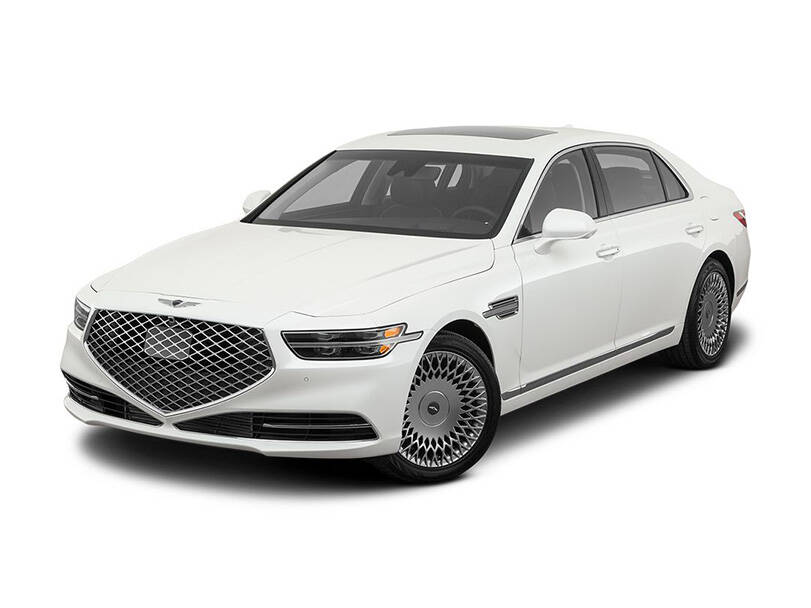
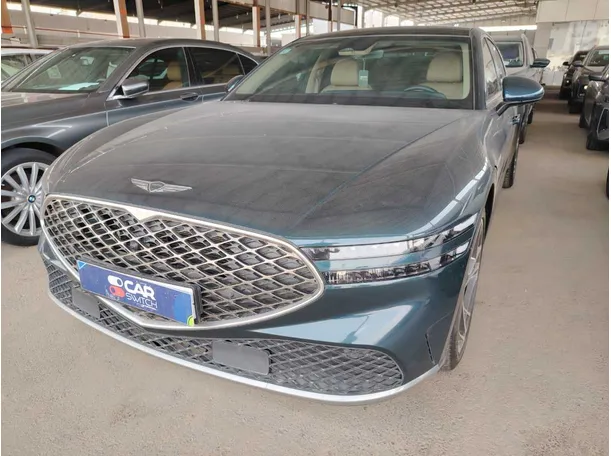
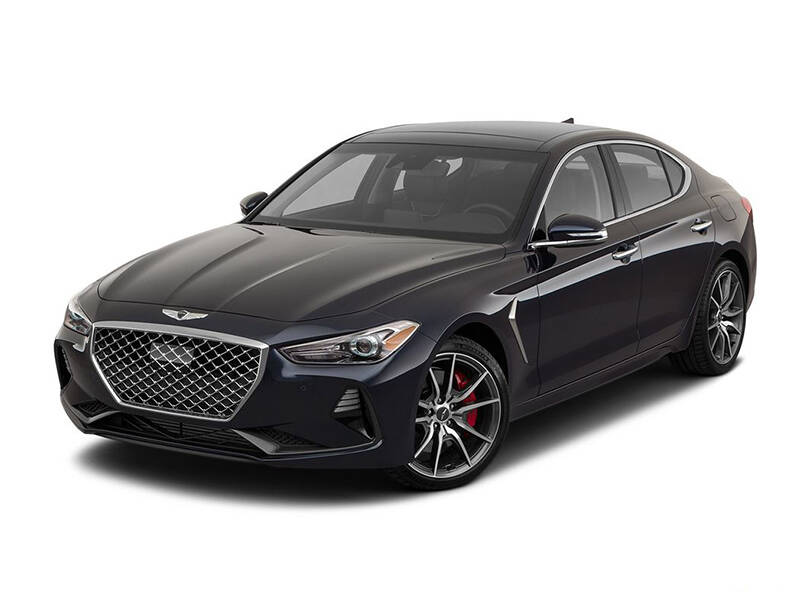
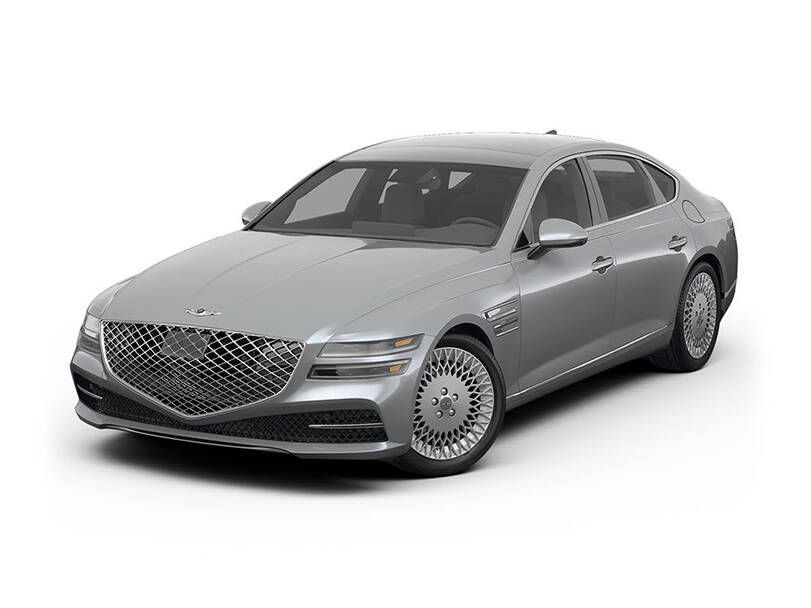
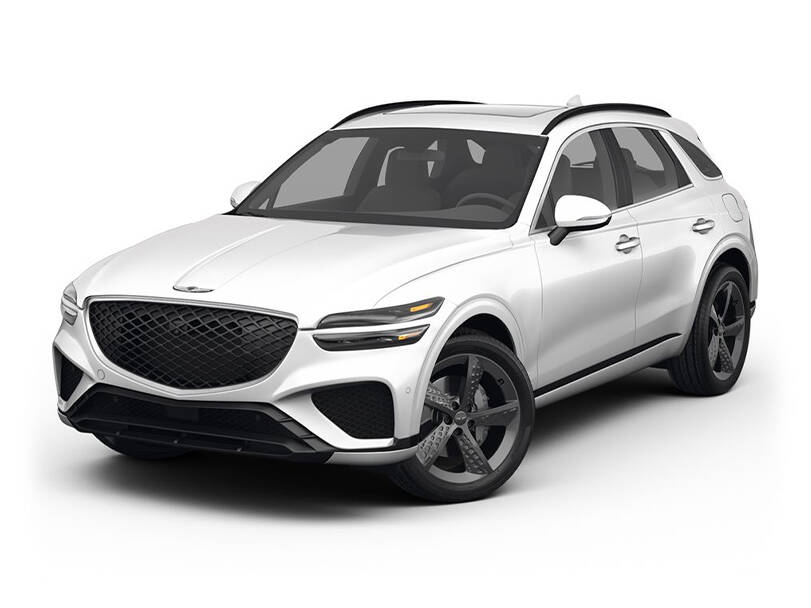
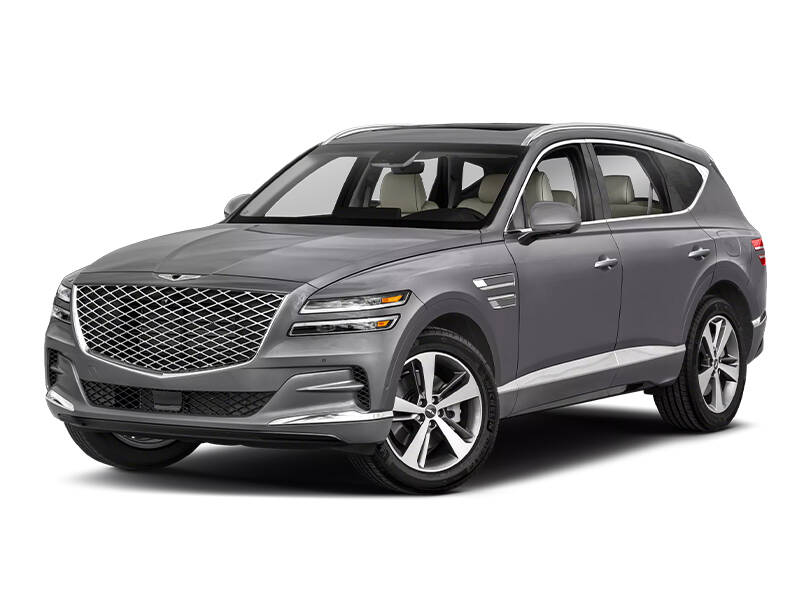
The Genesis G90 is a full-size luxury sedan that challenges the German establishment — BMW 7 Series, Mercedes-Benz S-Class, Audi A8 — with a flagship-grade cabin, striking design, and pricing that offers meaningful value at the top end of the market. The 2026 G90 starts from SAR 339,620.
The Saudi lineup is powered by a 3.5 L engine delivering 380 bhp, mated to an Automatic gearbox. The entry Prestige RWD trim is generously equipped with air suspension, dual-screen infotainment, ambient lighting, and rear-seat comfort features included as standard. The range-topping 3.5T SC steps up to an extended rear-seat experience with additional acoustic and thermal insulation and a more driver-focused dynamic setup — at SAR 502,000, it remains competitively priced against top-spec German alternatives. Fuel efficiency is competitive for its class given the engine size and power output.
Pros: the G90 delivers S-Class-calibre rear-seat luxury — reclining rear seats, massage functions, climate-controlled cushions — at a price that makes its rivals look expensive by comparison. The interior design language is genuinely distinctive, with layered textures and lighting that feel purpose-built rather than derivative. Cons: Genesis's service network in Saudi Arabia is still expanding, and for buyers in secondary cities, authorised after-sales access requires planning. Brand recognition among Saudi buyers at this price tier still trails the German marques, which can affect perceived status and resale liquidity.
As a newer luxury nameplate in the Saudi market, the G90 does not yet have a fully established residual value history. Qualitatively, depreciation is likely steeper than the S-Class or 7 Series over the first three to four years, though this is partially offset by the lower acquisition cost and high standard specification level.
Buyers considering the G90 in KSA also evaluate the BMW 7 Series, Mercedes-Benz S-Class, and Audi A8 — the segment's long-established benchmarks. The G90's case rests on superior standard equipment, a more original interior aesthetic, and a lower asking price; the German trio counters with deeper dealer networks and stronger resale values.
How much does the Genesis G90 cost in Saudi Arabia?
The spread here is unusually wide for a single model. SAR 339,620 buys the Prestige RWD with the 3.5 L six and 380 bhp; a pair of Platinum cars sit in the middle, and the 3.5T SC at SAR 502,000 is the supercharged long-wheelbase flagship. These are genuinely different cars, not equipment tiers.
Which G90 trim is the one to buy?
The 3.5T Platinum, in rear or all-wheel drive as your roads dictate. It is the version where the car becomes what it is meant to be — the full acoustic and seat package, the complete assistance suite — without stepping into the supercharged flagship's territory. The Prestige at the entry is a well-equipped saloon but misses the details that justify the model.
Genesis G90 or Audi A8?
The G90 offers more rear-seat luxury per riyal than anything else on sale, with equipment the German brands reserve for options packages, and its warranty runs longer than theirs. The Audi A8 is the more discreet and better-resolved car and it retains far more of its value. The BMW 7 Series is the one to have if you drive it yourself.
What does a Genesis G90 cost to run in Saudi Arabia?
More reasonable than the class average, because the underlying engineering comes from Hyundai's volume architecture rather than a bespoke premium line, and parts follow that pricing. The practical qualification is coverage: the authorised network is smaller than the German brands operate, so on a flagship this complex, confirm where the nearest capable workshop is before you buy.
What happens to a Genesis G90's value, and what should you inspect?
It falls short of its class, holding about 44% after five years against roughly 52% for the average large sedan in the Kingdom — flagships depreciate hardest, and a limited buyer pool for a large luxury saloon compounds it. Cars come through inspection at a median of around 80,000 km. At that distance the air suspension, the rear-seat electronics and the condition of the interior are what set one car's value apart from another's, and the report on the individual car covers them.


 Hi Guest