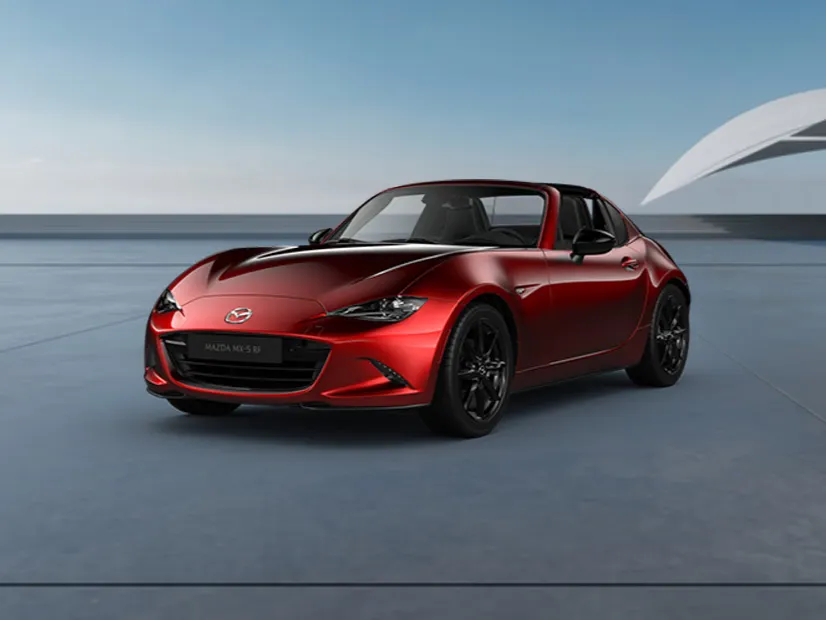
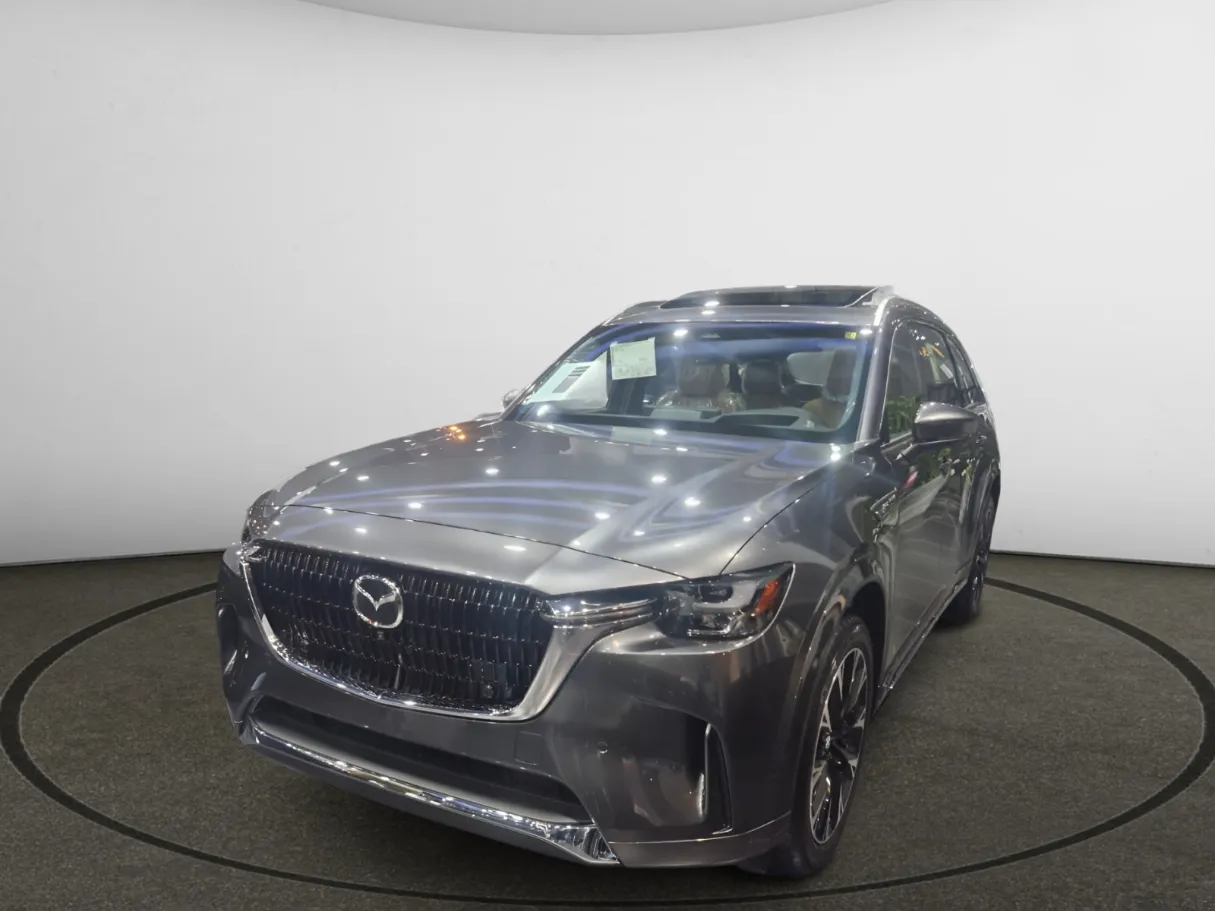
The 2026 Mazda MX-5 is the definitive lightweight roadster — a rear-wheel-drive two-seater engineered around driving pleasure rather than power or practicality. Few cars at any price match its steering feel and chassis balance, and the Roadster trim available in Saudi Arabia brings that experience in classic open-top form. Prices start from SAR 145,000.
Under the bonnet sits a 2.0-litre SKYACTIV-G 4-cylinder delivering 181 HP to the rear wheels. The KSA lineup is offered in the Roadster configuration — the traditional soft-top body that keeps the car as light and focused as possible. Seating is for 2 only, with a driver-centric cockpit that keeps every control within easy reach.
Pros: the Roadster is the lightest and most involving version of the MX-5 — the soft-top drops quickly, the weight is kept to a minimum, and the rear-wheel-drive balance on a twisty road is exceptional for the money. The MX-5 also has one of the strongest enthusiast communities in the region, which supports long-term ownership enjoyment and parts availability. Cons: this is unambiguously a weekend or second car — the 2-seat cabin, minimal boot space, and firm low-speed ride make it unsuitable as a daily driver in urban Saudi traffic. The 181 HP output is enough to be fun but will feel modest to buyers coming from higher-powered rivals.
No market-value retention data is available for the MX-5 in KSA at this time, but its niche positioning and consistent global demand mean it tends to depreciate more slowly than volume sports cars in the same bracket.
Buyers also look at the BMW Z4, Mercedes-AMG C 63 Cabriolet, and Porsche 911 Carrera Cabriolet — all open-top performance cars with significantly larger engines and price tags. The MX-5 wins on driver involvement per riyal and entry cost; buyers stepping up to those rivals are primarily seeking more power, brand prestige, or a more luxurious open-air experience.
How much does the Mazda MX-5 cost in Saudi Arabia?
SAR 145,000 for the Roadster, and there is nothing else in the range to weigh it against. No trim ladder, no engine choice, no option packs — you buy the car as Mazda designed it, with 181 HP driving the rear wheels through a chassis built around low weight.
Is the MX-5 practical enough for daily use?
Within limits, and honestly so. Two seats, a small boot and a soft roof make it a second car for most owners rather than the only one. What it does give you daily is a car that is small enough for city streets, cheap to fuel and simple to maintain — none of which is true of most things that are this enjoyable to drive.
Mazda MX-5 or BMW Z4?
The MX-5 is the better sports car and by some distance the better value. It is lighter, more playful and more communicative than anything else at this money, and its modest power output is the point rather than a limitation. The
BMW Z4 is quicker, plusher and far more expensive. The
Subaru BRZ is the alternative for buyers who want a roof.
What does an MX-5 cost to run in Saudi Arabia?
Remarkably little for a sports car. A small naturally aspirated engine, narrow tyres and a light body keep fuel, brakes and consumables cheap, and there is no complicated technology to fail. Servicing goes through Haji Husein Alireza & Co in Jeddah and Riyadh, so unlike most specialist cars this one is maintained through a mainstream network rather than a specialist workshop.
Does the MX-5 hold its value, and what should you watch for as it ages?
It keeps about 55% of its value after five years, level with the roughly 56% mainstream Japanese cars manage here — respectable for a car bought purely for enjoyment rather than for the ledger. Roadsters are judged on condition rather than distance covered, so on a used one the roof mechanism, the state of the paint after years of sun, and any sign of track use or modification are what matter. Those are facts about one specific car, which is exactly what an inspection report is for.


 Hi Guest