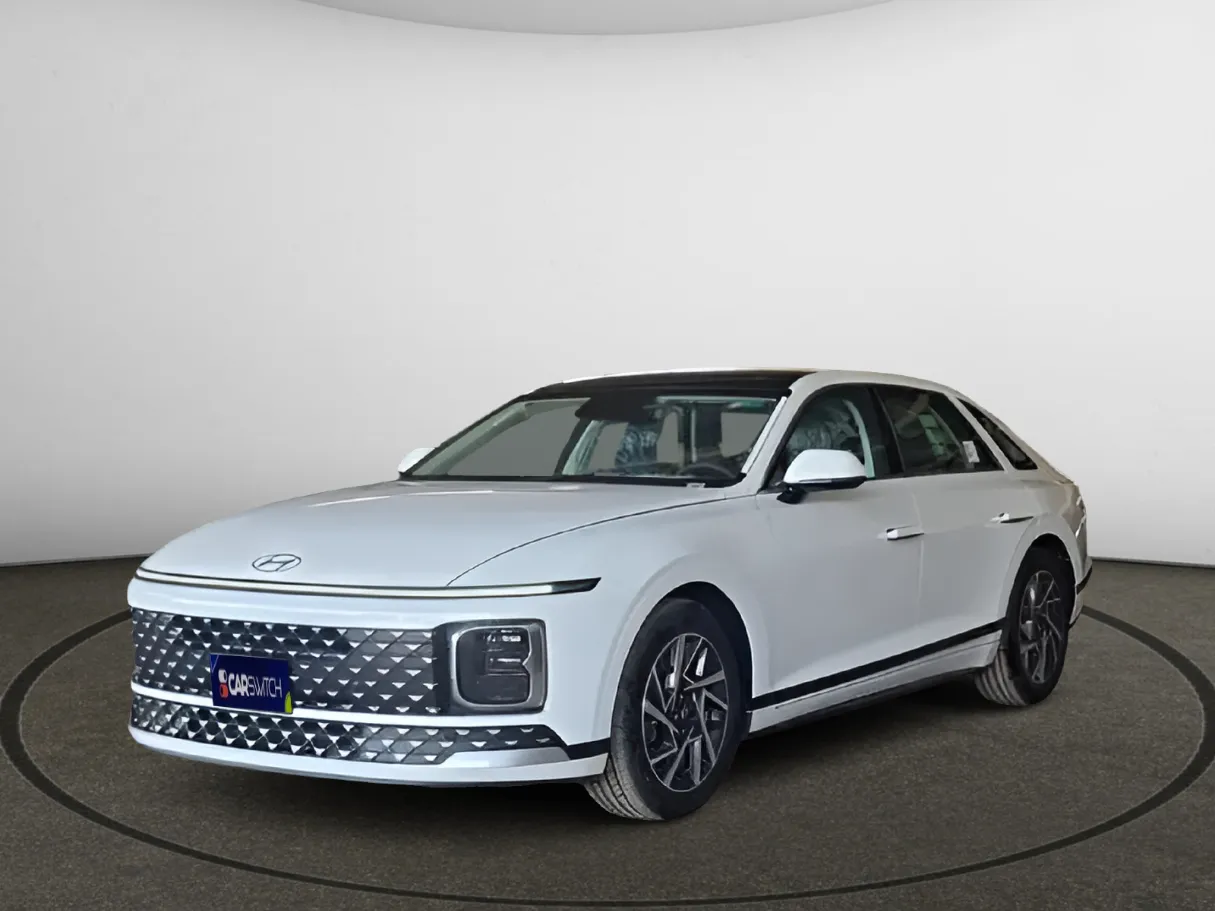
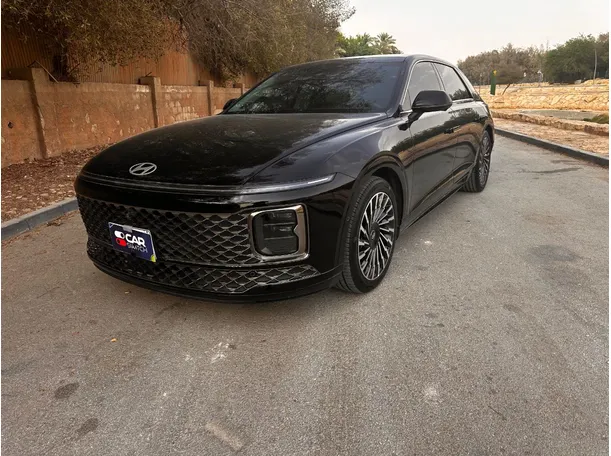
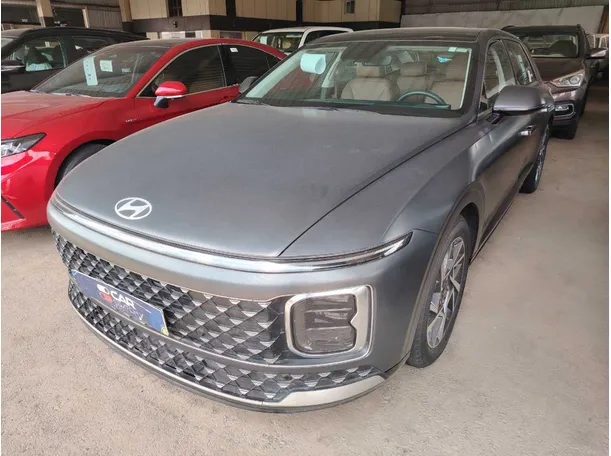
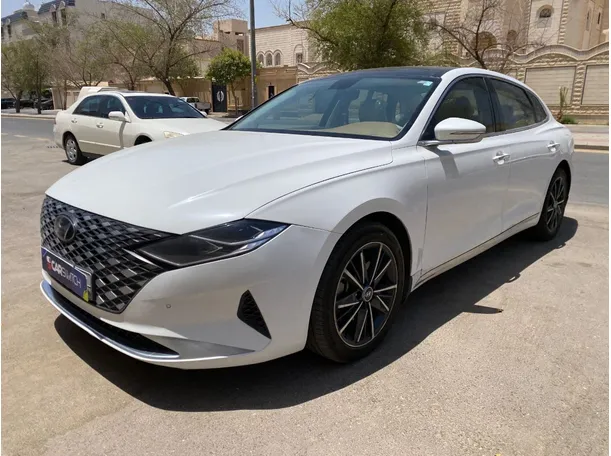
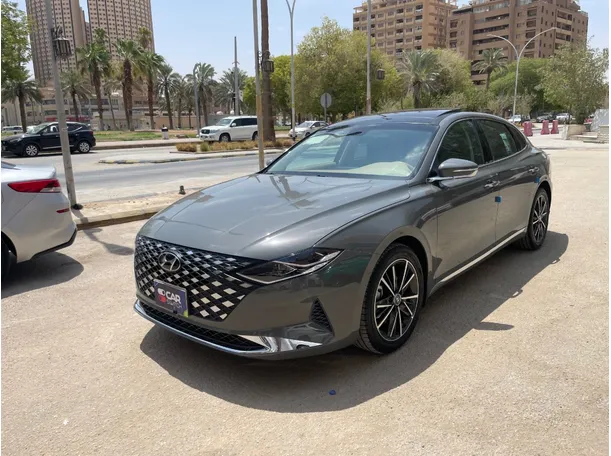
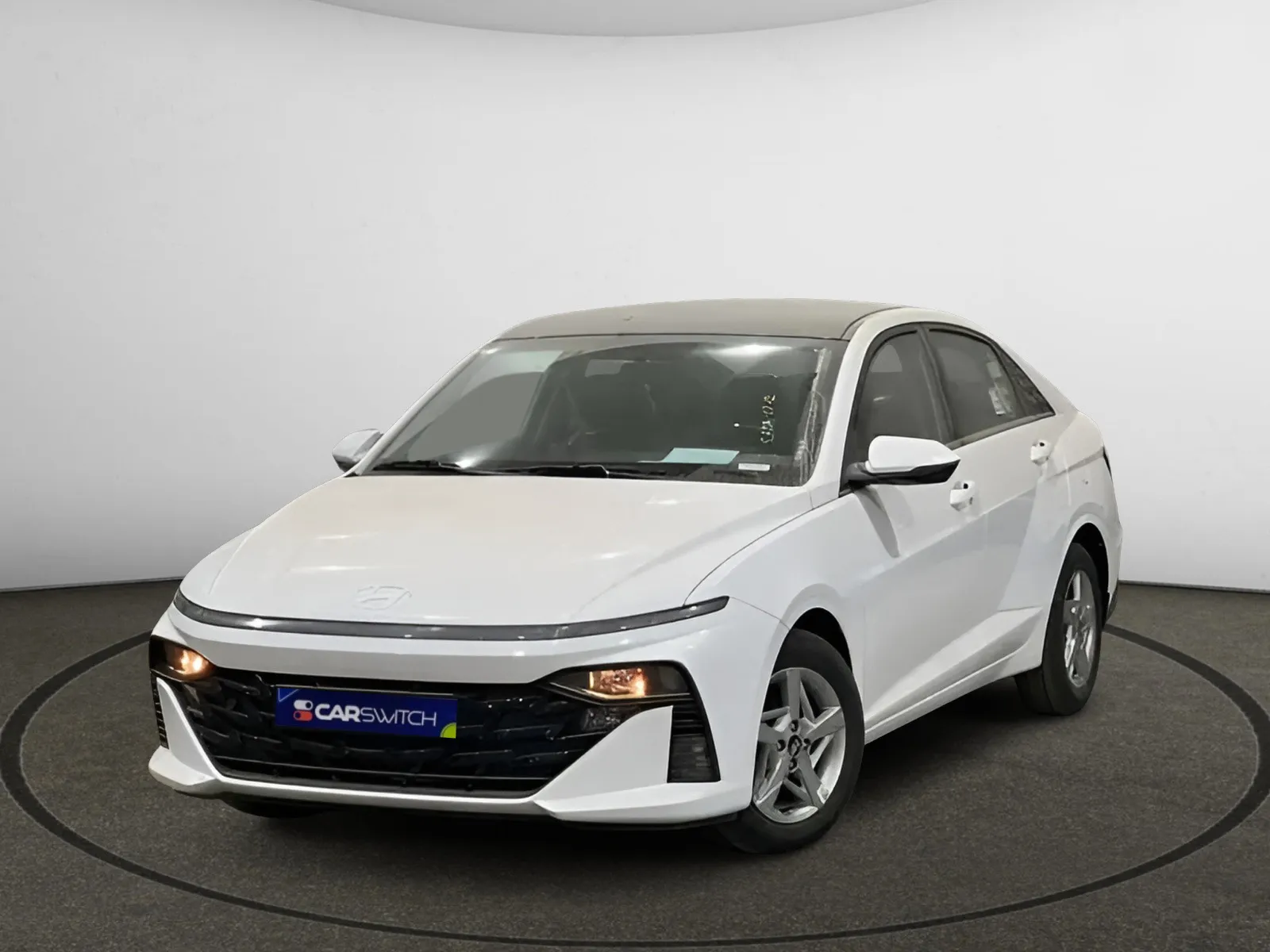
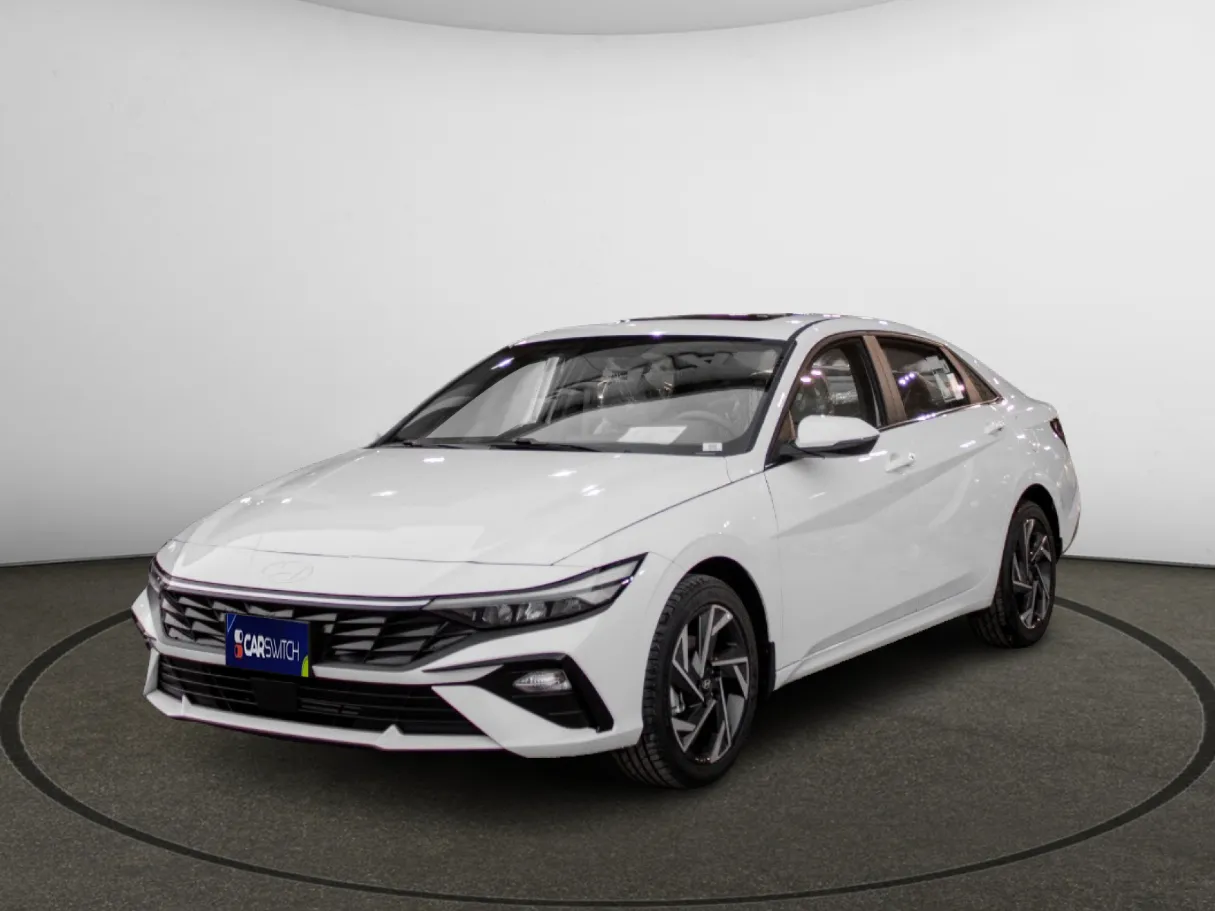
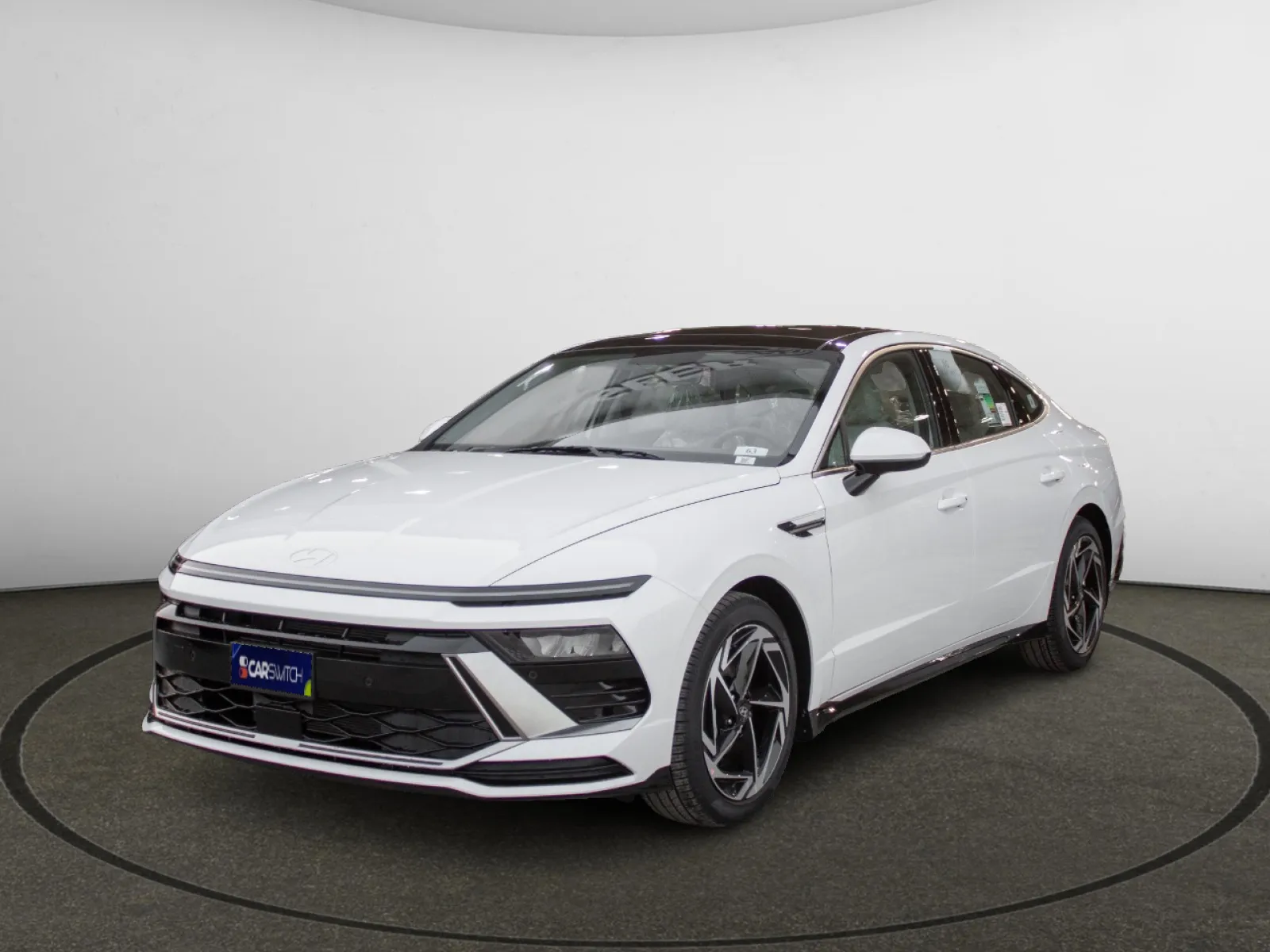
The Hyundai Azera is a full-size sedan built for buyers who want genuine rear-seat presence and a powerful, refined drive without crossing into European luxury pricing. The 2026 range in Saudi Arabia starts from SAR 148,281 for the 3.5L GDI A/T GL (Base) and runs to SAR 198,881 for the range-topping 3.5L GDI A/T Calligraphy (Top+).
All KSA variants are powered by a 3.5 L engine developing 300 bhp, mated to an Automatic gearbox. The base 3.5L GDI A/T GL (Base) provides a well-equipped entry point, while the 3.5L GDI A/T Calligraphy (Top+) adds an exclusive trim package — bringing signature exterior badging, quilted leather seating, a larger digital cockpit display, and enhanced acoustic insulation. The cabin comfortably seats 5 passengers, with rear legroom that compares favourably to far more expensive rivals. Fuel efficiency is competitive for its class given the engine's displacement and output.
Pros: the 300 bhp delivers confident, smooth acceleration at all speeds, and the 3.5L GDI A/T Calligraphy (Top+) interior quality genuinely challenges European executive cars at nearly double the price. Strong value for money across the range. Cons: front-wheel drive is a drawback for buyers who prioritise driving dynamics — rivals like the Genesis G80 offer rear-wheel drive at a higher price point. The large engine means it is thirstier than smaller-engined competitors in the segment.
No residual value data is currently available for the Azera in Saudi Arabia. Five used 2026 examples currently list from SAR 145,000 on CarSwitch — only a marginal discount to the new price, suggesting early depreciation is limited and the model holds its value well in the near term.
The Toyota Camry, Honda Accord and Nissan Altima are the natural alternatives here, sitting in the same segment at comparable prices.
How much does the Hyundai Azera cost in Saudi Arabia?
Every grade has the same V6, so nothing you spend above SAR 148,281 for the 3.5L GDI A/T GL (Base) changes how the car drives — it changes how it is finished, up to SAR 198,881 for the 3.5L GDI A/T Calligraphy (Top+). That makes this a rare full-size car where the entry model is not a decoy: it has the engine that matters.
Which Azera trim is the one to buy?
The base or mid grade, unless the interior is the reason you are buying. All four have the V6, the automatic and the same body, so the money above them goes on materials, screens and driver aids. The top Calligraphy is a genuinely luxurious car, but it is the grade that gives back the least of its price at resale.
Hyundai Azera or Toyota Camry?
The Azera is a class larger and the more comfortable car by a clear margin — six cylinders, more rear space and a quieter cabin at highway speed, for money that buys a well-equipped mid-size sedan elsewhere. The Toyota Camry is cheaper to run and much stronger at resale. The Nissan Altima is the value option if size is not the point.
What does a Hyundai Azera cost to run in Saudi Arabia?
More than a four-cylinder sedan, in fuel above all — a naturally aspirated V6 in a five-metre car has a fixed appetite. Against that, this engine family has been in service here for years, so parts and workshop familiarity are not the problem they can be with imported full-size sedans, and the authorised network handles warranty work on a model that is otherwise rare.
Does the Hyundai Azera hold its value, and what should you watch for as it ages?
Below the class — about 45% of its value after five years, against roughly 52% for Korean cars here, because large sedans lose buyers to SUVs faster than they wear out. That is a segment problem rather than a mechanical one; these cars age well and the V6 is under-stressed. What decides any individual example is service history and accident repair, which is what the inspection report on that specific car sets out.


 Hi Guest